- The Shift AI
- Posts
- OpenAI gave images a brain
OpenAI gave images a brain
Plus, 💪 Claude Mythos just found 271 security bugs in Firefox, Google just made its deep research agent dramatically more powerful, and more!

The Shift Newsletter
April 22, 2026
In partnership with


Welcome back to The Shift AI. Let’s get straight to what matters in AI today…
Today we have:
🎨 OpenAI Releases ChatGPT Images 2.0 and It Thinks Before It Creates
🔍 Google Just Made Its Deep Research Agent Dramatically More Powerful
🔐 Claude Mythos Just Found 271 Security Bugs in Firefox. In One Pass.
🔨Tools and Shifts you cannot miss
🎨 OpenAI Releases ChatGPT Images 2.0 and It Thinks Before It Creates
OpenAI launched ChatGPT Images 2.0, the first image model with thinking capabilities. It plans, searches the web, and checks its own outputs before delivering. Sam Altman called it "like going from GPT-3 to GPT-5 all at once." Now #1 on Arena AI's leaderboard.

The Shift:
It Thinks Before Generating - With thinking enabled, Images 2.0 searches the web for references, creates multiple images from one prompt, and double-checks outputs for errors before delivery, handling the gap between idea and image automatically.
Precision That Actually Works - Handles small text, iconography, UI elements, and dense compositions at up to 2K resolution, producing up to 8 images at once across aspect ratios from 3:1 ultrawide to 1:3 tall.
Multilingual Text Finally Works - Previous models struggled beyond English. Images 2.0 renders Japanese, Korean, Chinese, Hindi, and Bengali coherently, generating full visual designs where language is part of the composition, not just translated labels.
Style Fidelity Across Visual Languages - Captures the defining characteristics of photos, cinematic stills, pixel art, and manga with improved consistency in texture, lighting, and detail, making it useful for storyboarding, marketing creative, and game prototyping.
This moves image generation from a rendering tool to a visual system that follows detailed instructions, works across languages, and matches specific styles reliably, available now in ChatGPT, Codex, and the API.
Together with Accio Work
Accio Work: your agentic team for real business
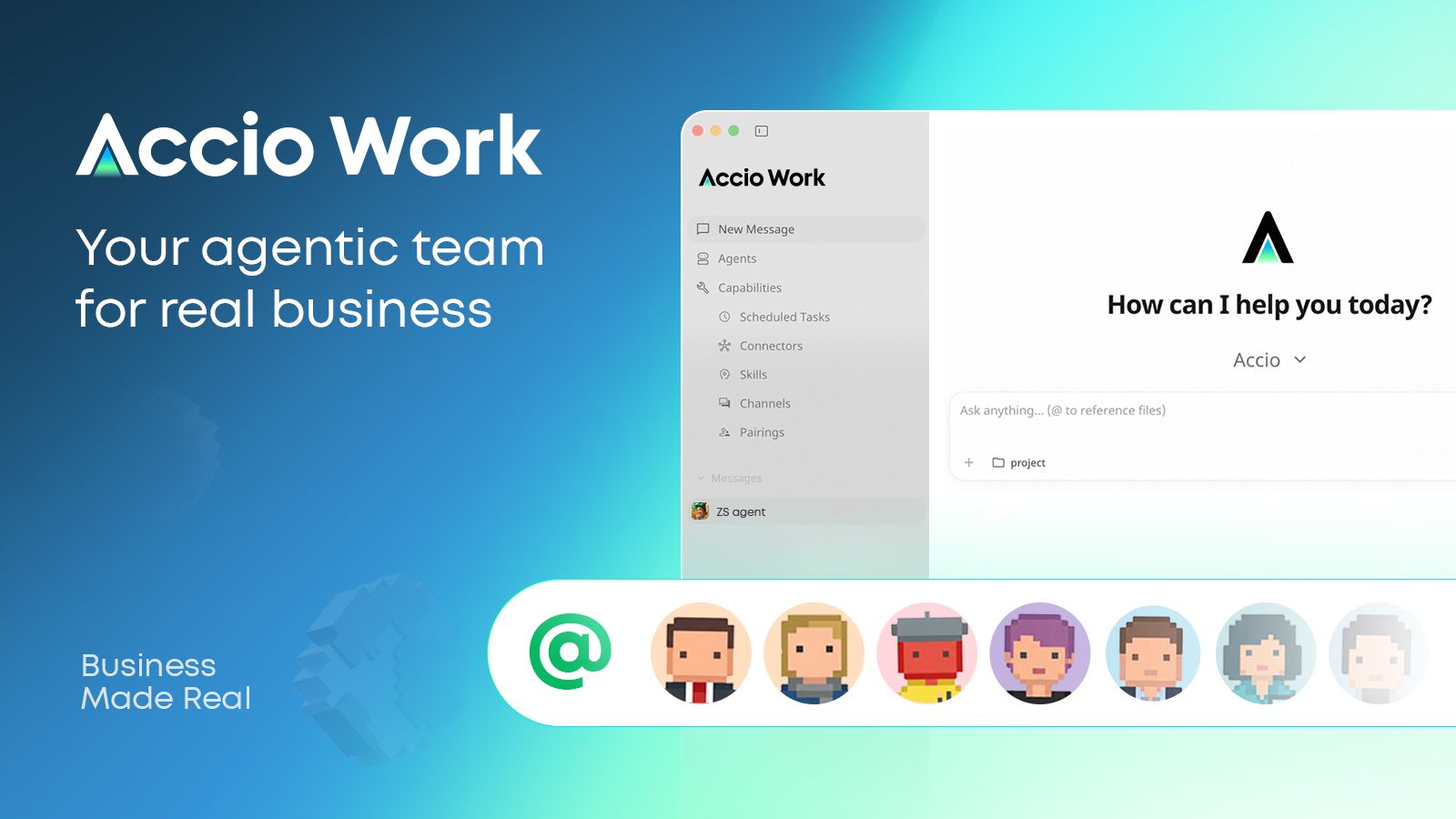
Meet Accio Work—the agentic workspace for business owners and solopreneurs. Our specialized agent team manages operations for you—sourcing products, negotiating with suppliers, managing stores, and launching marketing—all on autopilot.
With verified skills and business tool APIs, Accio Work takes action while you stay in control. Powered by Alibaba.com’s 1B+ products and global supplier data, it handles product selection and execution seamlessly. No setup required—just results.
🔍 Google Just Made Its Deep Research Agent Dramatically More Powerful
Google launched Deep Research and Deep Research Max this week, two new evolutions of its autonomous research agent powered by Gemini 3.1 Pro, replacing the December preview and outperforming Opus 4.6 and GPT 5.4 on retrieval and reasoning benchmarks.

The Shift:
Two Agents, Two Jobs - Deep Research is optimized for speed and lower latency on interactive surfaces. Deep Research Max is built for asynchronous background workflows like nightly cron jobs, generating exhaustive due diligence reports for analyst teams by morning.
Your Data, Not Just the Web - Both agents support MCP servers, file uploads, and connected file stores alongside open web search. You can also cut off external web access entirely and run research exclusively over your own private data.
Native Charts and Financial Data Built In - Deep Research now natively generates charts and infographics inline alongside reports for the first time. Google is working with FactSet, S&P Global, and PitchBook to pipe paid financial data directly into research workflows via MCP.
More Control Over the Research Process - Collaborative planning lets users review and refine the research plan before execution. Real-time streaming tracks intermediate reasoning steps live with multimodal inputs, including PDFs, CSVs, images, audio, and video.
Both agents run on the same infrastructure powering NotebookLM, Gemini App, and Google Finance. Deep Research and Deep Research Max are available now in public preview via paid Gemini API tiers with Google Cloud availability coming soon.
🔐 Claude Mythos Just Found 271 Security Bugs in Firefox. In One Pass.
Firefox 150 released this week with patches for 271 vulnerabilities, all found by Claude Mythos Preview as part of Project Glasswing, Anthropic's initiative giving its most powerful model to defenders before attackers get access.

The Shift:
What Mythos Actually Found - In a single evaluation, Mythos identified 271 vulnerabilities in Firefox, a 27-year-old bug in OpenBSD, and a 16-year-old flaw in FFmpeg that automated scanners had checked five million times without flagging anything.
How Good Is It Really - Mythos scored 90x better than Anthropic's previous best model at writing working Firefox exploits. The Firefox team found no category of vulnerability that human researchers can find that Mythos cannot match.
Why This Changes Everything - Security has historically been offensively dominant, attackers only need one vulnerability, while defenders must protect everything. AI closing that gap erodes the attacker's long-term advantage by making all discoveries cheap for both sides.
The Bigger Picture In 2025 - finding just one of these bugs would have been a red alert. Firefox just patched 271 in a single release. The Firefox team believes defenders finally have a genuine chance to win decisively.
Project Glasswing is a coordinated race to patch the internet before AI-powered hacking becomes cheap and accessible. Mythos also developed a browser exploit chaining four vulnerabilities together to escape both the browser sandbox and the operating system itself.
Together with Fintech Takes

Most coverage tells you what happened. Fintech Takes is the free newsletter that tells you why it matters. Each week, I break down the trends, deals, and regulatory shifts shaping the industry — minus the spin. Clear analysis, smart context, and a little humor so you actually enjoy reading it. Subscribe free.
🔨AI Tools for the Shift
💃 Viyou AI Dance Generator - Turn text or images into dynamic AI-generated dance videos in seconds.
🔍 AgenticLens - See how AI agents perceive your brand and uncover opportunities to improve visibility across major AI platforms.
📚 ComicInk - Turn your stories into visually stunning AI-generated comics and sell them through your own creator store.
📞 KaiCalls - An AI assistant that answers business calls, captures leads, books appointments, and briefs you automatically.
🧠 Scrunch - Monitor how AI assistants talk about your brand and get insights to improve your positioning.
🚀Quick Shifts
⚠️ Anthropic’s Mythos AI, designed to find and exploit system vulnerabilities, was reportedly accessed by unauthorized users via a compromised contractor account, though the breach appears limited to a third-party environment.
🚀 SpaceX may acquire AI coding platform Cursor for $60B or pay a $10B partnership fee, aiming to combine Cursor’s tools with its massive compute infrastructure to build advanced coding-focused AI models.
🤖 NeoCognition raised $40M in seed funding to build self-learning AI agents that can specialize like humans, aiming to improve reliability beyond today’s agents that complete tasks correctly only about 50% of the time.
🍏 Apple’s incoming CEO John Ternus inherits a $4T giant facing regulatory battles, China dependence, AI uncertainty, and leadership turnover, making the role a high-stakes test of navigating geopolitics, innovation, and Apple’s future direction.
🎭 YouTube is expanding its AI deepfake detection tool to celebrities, allowing them to identify, track, and request removal of impersonating videos, though takedowns depend on policy and won’t apply to all content.
🧩 Prompt of the Day
How to Reactivate Dormant Customers and Win Them Back
Most brands ignore inactive users. The smartest ones turn them into the highest ROI segment by re-engaging with the right message at the right time.
Bring customers back before they forget you completely.
Paste the prompt: Drop this into ChatGPT, then fill in your brand and audience.
Create a reactivation campaign for [Insert brand] targeting inactive customers based on defined criteria. Suggest messaging with incentives, reminders, or new value propositions. Recommend outreach channels like email, SMS, and ads. Focus on re-engaging users and driving them back to purchase or interact again.
That’s all for today’s edition. See you tomorrow as we track down and get you all that matters in the daily AI Shift!
If you loved this edition, let us know how much:
How good and useful was today's edition |
Forward it to your pal to give them a daily dose of the shift so they can 👇
Reply