- The Shift AI
- Posts
- Google Beat OpenAI in a Day
Google Beat OpenAI in a Day
Plus, Anthropic says AI can now identify software flaws at massive scale, How to build a content calendar inside AppFlowy, and more!

The Shift Newsletter
May 25, 2026
In partnership with


Welcome back to The Shift. Let’s get straight to what matters in AI today…
Today we have:
🧮 Google DeepMind solves nine erdős problems one day after openai claimed its own
📅 How to build a content calendar inside AppFlowy
🔐 Anthropic says AI is now finding software flaws at a massive scale
🔨Tools and Shifts you cannot miss
🧮 Google DeepMind Solves Nine Erdős Problems One Day After OpenAI Claimed Its Own
Google DeepMind's AlphaProof Nexus solved nine open Erdős problems including two unsolved for 56 years, arriving just a day after OpenAI announced it had disproved an 80-year-old Erdős conjecture.

The Shift:
Machine-Verified Proofs at Scale - The system pairs an LLM with Lean proof assistant to generate fully verified proofs across combinatorics and graph theory, with each problem costing just a few hundred dollars to solve.
44 More Conjectures on Top - Beyond the nine Erdős problems, AlphaProof Nexus also proved 44 open conjectures from the Online Encyclopedia of Integer Sequences, showing this is a repeatable capability not a one-off result.
It Still Has Limits - A simpler agent version matched the results but cost more, and problems requiring entirely new mathematical constructions remained out of reach, meaning creative mathematical invention is still beyond the system.
The Timing Says Everything - OpenAI claimed its Erdős breakthrough last week after previously walking back a 10-problem claim months earlier. Google dropping nine verified solutions the next day makes the AI maths race impossible to ignore.
Two companies are solving problems that stumped mathematicians for decades at a few hundred dollars each. Mathematics is becoming the first field where AI provably exceeds what humans achieved alone.
Together with Masterworks
Someone just spent $236,000,000 on a painting. Here’s why it matters for your wallet.

Late last year, a Klimt sold for the highest price ever paid for modern art at auction.
An outlier sure, but it wasn't a fluke. U.S. auction sales grew 23.1% in 2025. The $1-5mm segment even grew 40.8% YoY.
Meanwhile, Apollo’s chief economist Torsten Slok said to expect ‘zero in return in the S&P 500 over the coming decade.’
Each environment is unique, but after dot-com, post war and contemporary art grew about 24% annually for a decade. After 2008, about 11% for 12 years.
It’s also had near-zero correlation with the S&P 500 since ‘95.*
Now, Masterworks lets you invest in shares of artworks featuring legends like Banksy, Basquiat, and Picasso.
$1.3 billion invested across over 500 artworks.
28 sales to date.
Net annualized returns on sold works held 12 months+ like 14.6%, 17.6%, and 17.8%.
Shares can sell quickly, but my subscribers can skip the waitlist:
*Investing involves risk. Past performance is not indicative of future returns. See important Reg A disclosures at masterworks.com/cd.
📅 How to Build a Content Calendar Inside AppFlowy
AppFlowy lets you turn everything into one visual workflow just like Notion, where ideas, drafts, schedules, and publishing all happen inside the same workspace.

Step 1: Create a new database page
Open AppFlowy, click New Page, then create a Database called “Content Calendar.”
Step 2: Add your workflow fields
Create columns like Platform, Status, Publish Date, Owner, and Content Type to organize every post.
Step 3: Turn it into a Kanban board
Switch the database to Board View and group by Status with stages like Idea, Drafting, Review, Scheduled, and Published.
Step 4: Open each card as a working doc
Click any content card and write the actual hook, caption, script, research, and creative notes directly inside the page.
Step 5: Add Calendar View for scheduling
Create a Calendar View connected to the Publish Date field so your entire posting schedule becomes visual.
Step 6: Use AI to speed up creation
Use AppFlowy AI to rewrite hooks, summarize research, brainstorm ideas, or clean up drafts without leaving the workspace.
Once the setup is done, AppFlowy becomes your entire content operating system. Your team can plan campaigns, track progress, write posts, and manage publishing from one place instead of constantly switching between tools. You can try AppFlowy here.
🔐 Anthropic says AI is now finding software flaws at massive scale
Anthropic shared the first results from Project Glasswing, revealing that Claude Mythos Preview and partner organizations uncovered thousands of critical vulnerabilities across major infrastructure, open-source software, and enterprise systems in just one month.

The Shift:
Bug discovery accelerated sharply - Anthropic said partners collectively identified more than 10,000 high and critical vulnerabilities, with several organizations reportedly increasing their bug-finding rates by over ten times using Mythos Preview.
Large platforms patched aggressively - Cloudflare reportedly found 2,000 bugs with strong precision rates, while Mozilla discovered and fixed 271 Firefox vulnerabilities, significantly more than earlier Claude-powered security testing runs.
AI scanned internet infrastructure - Anthropic used Mythos Preview to scan over 1,000 open-source projects, flagging 6,202 high or critical vulnerabilities, with independent reviewers later validating thousands of those findings.
Mythos moved beyond bug hunting - Anthropic said one partner bank used Mythos Preview to detect and block a fraudulent $1.5 million wire transfer after attackers compromised a customer’s email account and spoofed calls.
Anthropic is showing how quickly AI is changing cybersecurity from manual investigation into large-scale automated vulnerability discovery. The new bottleneck is no longer finding software flaws, but verifying, patching, and responding to them fast enough.
Together with Viktor
Your ads ran overnight. Nobody was watching. Except Viktor.
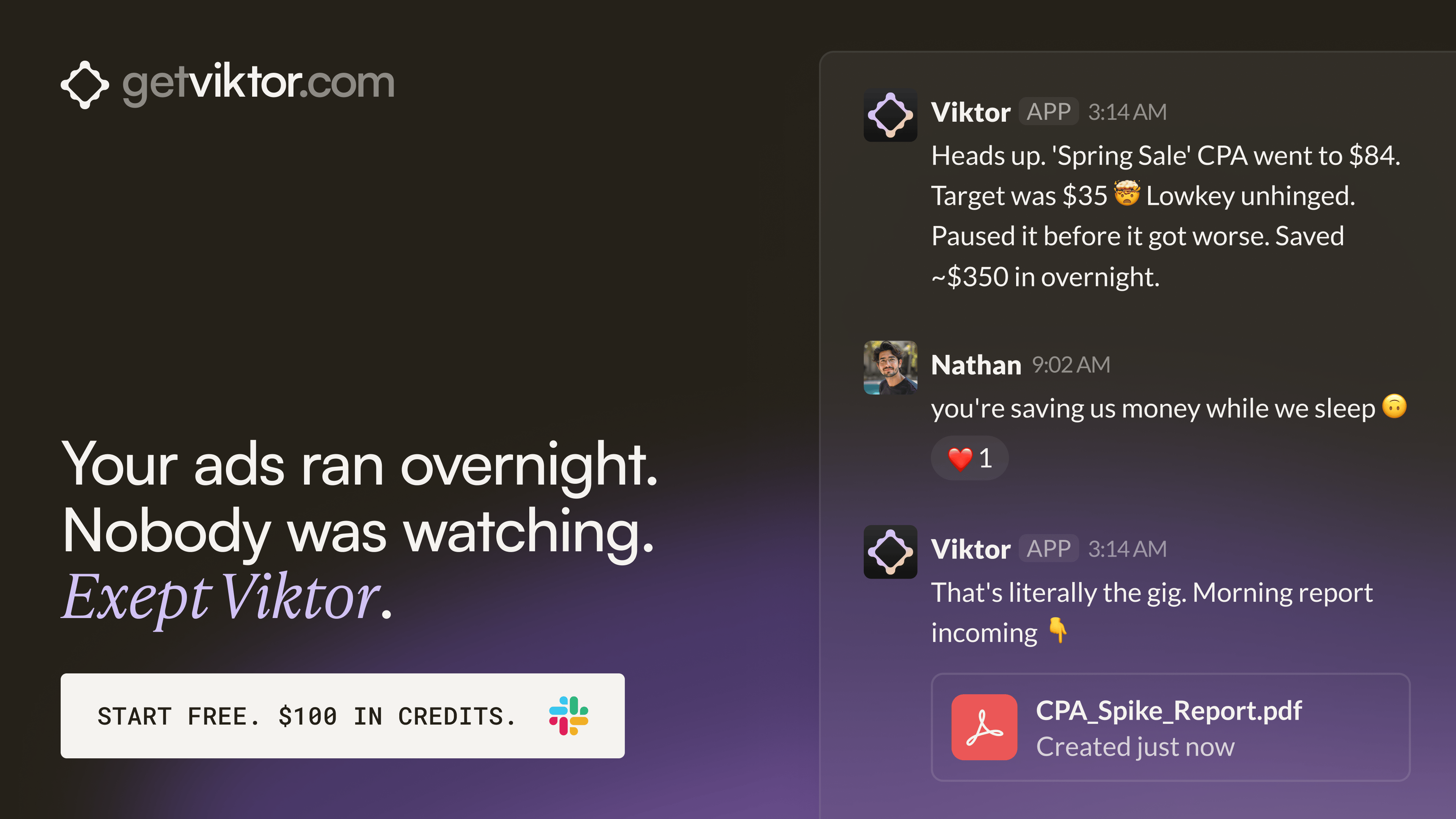
One brand built 30+ landing pages through Viktor without a single developer.
Each page mapped to a specific ad group. All deployed within hours. Viktor wrote the code and shipped every one from a Slack message.
That same team has Viktor monitoring ad accounts across the portfolio and posting performance briefs before the day starts. One colleague. Always on. Across every account.
🔨AI Tools for the Shift
🕵️ BSmeter – Analyzes videos and content in real time to flag weak claims, surface sources, and expose misinformation as you watch.
⚙️ Adapt – Connects company systems so teams can ask questions, automate workflows, schedule tasks, and build apps from live business data.
💸 FlipTip AI – Scans items with your phone and instantly checks resale platforms to see whether they can flip for profit.
🗣️ Lingle – Uses AI tutoring to help users improve language skills with personalized and optimized learning experiences.
📄 Resumedit – Tailors resumes to specific job descriptions with AI-powered keyword matching and ATS optimization.
🚀Quick Shifts
🇺🇸 The White House requested $9 billion to expand AI infrastructure for U.S. intelligence agencies, aiming to buy Nvidia Grace Blackwell chips after reports that the CIA and NSA lack enough compute capacity for advanced AI models.
🔍 Google’s new AI-first Search experience is surfacing awkward failures, with simple queries like “disregard” showing giant empty AI summary blocks instead of useful dictionary results, making Bing temporarily more useful for basic search.
🔐 Anthropic is expanding Project Glasswing access, letting qualifying customers use Claude Mythos security tools like threat model builders and vulnerability harnesses, while also publishing Mythos-discovered open-source vulnerabilities publicly.
💸 DeepSeek slashed V4-Pro pricing by 75%, dropping costs to just $0.435 per million input tokens and $0.87 output tokens, massively undercutting most closed-source AI competitors.
🛡️ Perplexity open-sourced Bumblebee, a macOS and Linux security scanner that detects risky packages, browser extensions, and unsafe AI tool configurations during software supply-chain attacks.
🧩 Prompt of the Day
Product Naming Workshop That Creates Memorable Brands
Most product names sound generic or forgettable. Strong names align with brand identity, stand out in the market, and instantly create the right emotional association.
Turn naming into a strategic advantage, not a last-minute task.
Paste the prompt: Drop this into ChatGPT, then fill in your product details.
Prompt to paste
Create a product naming workshop for [Insert product or category]. Define the brand alignment criteria, including tone, positioning, audience appeal, memorability, simplicity, and differentiation from competitors. Generate multiple product name ideas across different styles such as modern, premium, playful, descriptive, or minimalist. Include a customer feedback plan using surveys, polls, interviews, or social testing to evaluate which names resonate most strongly. Focus on choosing a name that is distinctive, brand-aligned, and easy for customers to remember and trust.🤳AI Shift of the Day

That’s all for today’s edition. See you tomorrow as we track down and get you all that matters in the daily AI Shift!
If you loved this edition, let us know how much:
How useful was today's edition? |
Forward it to your pal to give them a daily dose of the shift so they can 👇
Reply